François Louche: Exploring Music Through Water
What happens to music when it is no longer simply played in the air, but transmitted directly through water?
For more than four decades, French composer and bioacoustics researcher François Louche has explored this question through music, sound, listening and aquatic environments.
His work has contributed to the development of a specific approach to underwater music composition, in which music is designed or adapted to take into account the unique way sound is perceived when the body is immersed in water.
For AquaMusic, this research represents an important part of the history of underwater listening.
Who Is François Louche?
François Louche is a composer, conductor and researcher whose work focuses on sound perception, bioacoustics and the relationship between music and the human body.
According to his own research and publications, his first experiments with underwater music date back to 1980, when he created compositions intended for marine mammals at the Vancouver Aquarium.
In 1986, he began adapting his work for human listeners and developed approaches centered on underwater listening and aquatic music therapy.
His work would later become closely associated with the concept that AquaMusic calls Musical Massage.
The Origins of François Louche’s Underwater Music
Traditional music is composed primarily for listening through air.
Underwater listening changes the experience considerably.
Sound travels differently through water, while immersion also changes the way listeners perceive the position and direction of sounds.
François Louche therefore began exploring compositions specifically adapted to an aquatic environment.
Music Designed for Immersion
Rather than simply playing conventional music through an underwater speaker, his approach focuses on the characteristics of the sound itself.
This can include changes in:
frequency distribution;
dynamics;
tonal balance;
rhythm;
texture;
spatial perception.
The objective is to create music that remains expressive and immersive when transmitted through water.
Why Does Music Sound Different Underwater?
Water and air have very different acoustic properties.
Sound travels significantly faster through water than through air, and the human auditory system is primarily adapted to locate sounds in air.
As a result, underwater listening can feel unusual.
The listener may have greater difficulty identifying where a sound comes from, while vibrations transmitted through the surrounding water contribute to a highly immersive perception.
This is one of the reasons why music designed for underwater listening cannot always be approached in exactly the same way as conventional music.
From Underwater Listening to “Musical Massage”
François Louche’s work contributed to an approach centered on both the auditory and sensory perception of music during immersion.
AquaMusic later adopted the term Musical Massage to describe this type of underwater listening experience.
The expression does not mean that sound literally replaces a physical massage.
Instead, it describes the subjective sensory experience created when music and low-frequency vibrations are perceived while the body is immersed in water.
For some listeners, this can create sensations of enveloping sound and deep immersion that differ significantly from listening to music outside the pool.
What Is Underwater Music Composition?
Underwater music composition involves considering the aquatic environment from the beginning of the creative process.
A composition intended for underwater listening may therefore require different choices from a conventional stereo recording.
Frequency Balance
Some frequencies may be perceived differently underwater.
The composition and reproduction system must therefore provide enough balance across the audible spectrum to preserve musical detail.
Dynamics
Changes in volume and intensity contribute strongly to the perception of movement and contrast within the music.
Timbre
Different instruments, voices and electronic sounds behave differently when reproduced through an underwater sound system.
Rhythm
Rhythmic elements can play an important role in creating a physical and immersive sensation.
Spatial Perception
Because sound localization is different underwater, the listener can experience music as less directional and more enveloping.
The “Flouche Effect”
In his writings, François Louche describes what he calls the “Flouche Effect.”
The concept refers to the perception of specially processed or “densified” music when transmitted underwater.
According to Louche, some musical recordings require additional processing in order to create the desired sensory experience during immersion.
Rather than treating this as a scientifically established physiological effect, it is better understood as part of Louche’s experimental approach to music production and underwater listening.
It reflects an important principle:
Music Designed for Water May Need to Be Different From Music Designed for Air
The acoustic environment changes, so the musical material can also be adapted accordingly.
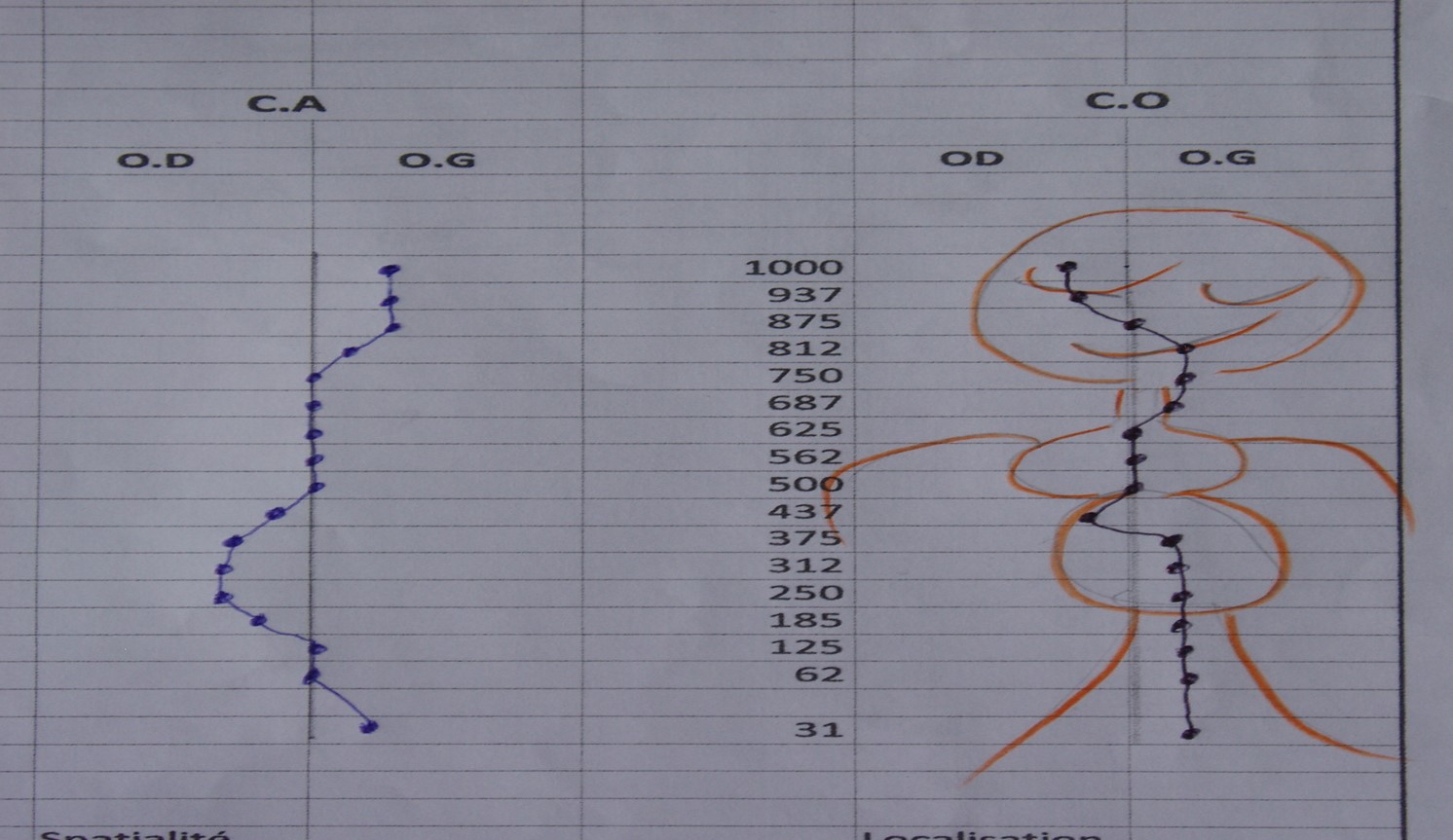
Air Conduction, Bone Conduction and Underwater Listening
François Louche’s work also explores different pathways through which humans perceive sound.
Air Conduction
Under normal listening conditions, sound waves travel through the air and enter the ear canal.
Bone Conduction
Vibrations can also reach the inner ear through the bones of the skull and body.
Bone-conduction technology is already used in applications such as specialized headphones and hearing devices.
Underwater Sound
During immersion, the listener is exposed to acoustic vibrations transmitted through water.
This creates a different combination of auditory and bodily perception compared with conventional listening.
Understanding these differences is important when designing both underwater music and underwater sound systems.
Music, Water and Sensory Perception
François Louche’s work belongs to a broader field of exploration into how sound interacts with human sensory perception.
His approach combines several areas:
Music Composition
Creating and adapting music specifically for different listening environments.
Psychoacoustics
Exploring the way humans perceive pitch, timbre, intensity and spatial characteristics.
Bioacoustics
Studying relationships between sound, living organisms and biological perception.
Aquatic Listening
Exploring how immersion modifies the experience of sound and music.
This multidisciplinary approach has shaped much of his work on underwater music.
The Connection Between François Louche and AquaMusic
François Louche’s research is closely connected to the history of AquaMusic.
Both approaches share the same fundamental question:
How can music be experienced differently when the listener is immersed in water?
François Louche focuses primarily on composition, perception and experimental listening.
AquaMusic focuses on the technology required to transmit high-quality sound underwater.
Together, these two areas highlight an essential point:
Underwater Music Requires Both Suitable Content and Suitable Technology
A carefully designed composition cannot deliver its intended experience without an appropriate underwater reproduction system.
Likewise, even a high-quality underwater speaker depends on suitable musical material to create a compelling listening experience.
From Experimental Music to Aquatic Wellness
Underwater music has gradually found applications in several environments.
These include:
swimming pools;
spas;
thermal facilities;
aquatic relaxation;
artistic performances;
synchronized swimming;
rehabilitation environments;
experimental music therapy.
François Louche’s work helped explore some of these possibilities long before underwater audio became commercially accessible.
More Than 40 Years of Research Into Underwater Music
François Louche began exploring underwater compositions in the early 1980s.
Since then, his work has continued to investigate the relationships between:
music, vibration, listening, the body and water.
His compositions and experiments offer a different perspective on music.
Instead of considering sound only as something that reaches the ears, underwater listening turns the entire aquatic environment into part of the musical experience.
This idea remains closely connected to AquaMusic’s mission today.
Frequently Asked Questions About François Louche and Underwater Music
Who Is François Louche?
François Louche is a French composer and researcher whose work explores bioacoustics, music perception and underwater listening.
When Did François Louche Begin Composing Underwater Music?
According to his published work, his first underwater compositions date back to 1980 and were initially created in connection with experiments involving marine mammals.
What Is Underwater Music?
Underwater music is music reproduced directly through water using dedicated underwater speakers or transducers.
It can involve conventional recordings or compositions specifically designed for underwater listening.
Does Music Sound Different Underwater?
Yes.
Because water transmits sound differently from air, underwater music can have different spatial, tonal and sensory characteristics.
What Is Musical Massage?
Musical Massage is the term used by AquaMusic to describe an immersive underwater listening experience in which music and acoustic vibrations are perceived while the body is immersed.
It should be understood as a sensory and wellness experience rather than a literal replacement for manual massage.
Can Any Music Be Played Underwater?
Technically, most recorded music can be reproduced through a suitable underwater sound system.
However, some compositions or mixes may work better than others because frequency balance, dynamics and timbre are perceived differently underwater.
What Equipment Is Needed for Underwater Music?
A dedicated underwater speaker or transducer, a compatible amplifier and an appropriate audio source are required.
The configuration depends on the size of the pool, the intended application and the desired listening experience.